
Why Women Are Avoiding Strength Training (And Why Your Joints Want You to Start)
Why Women Are Avoiding Strength Training (And Why Your Joints Want You to Start)
So do we. Sign up to our emails to receive news and advice on staying active and exclusive discounts. Plus enjoy 15% off your first order.



If you've ever hesitated to pick up a pair of dumbbells because you were worried about your knees, hips, or back, you are far from alone. In our recent survey, we found that 46% of women actively avoid strength or resistance training out of fear it could worsen joint pain¹.
That number jumps to 53% among women aged 46–61¹, the exact time in life when maintaining muscle mass and protecting joint health is more critical than ever. As rapid weight loss continues to dominate health trends, it has become even more important to understand that losing weight without building supportive muscle can leave your joints vulnerable in the long run.
The data shows a common pattern in how we approach joint discomfort. An overwhelming 85% of women believe weight loss is the most effective way to reduce joint strain¹, with more than a quarter viewing it as their first step.
Managing your weight can help reduce joint strain, but it shouldn't be the only focus. Strong muscles act as a protective shield around your joints by absorbing impact when you move. Without strength training, you're missing out on the best way to protect your joints long-term.
Keely, a 42-year-old mother of three and secondary school worker from Stockport, knows this apprehension firsthand. Facing a family history of arthritis, she spent years sticking strictly to dieting and walking to manage persistent hip pain.
"I genuinely thought I had to lose weight before I could even think about strength training," she said. "I was worried it would make my hip pain worse. I thought weights were for the really fit people, not someone like me."
After undergoing several operations for kidney stones, Keely decided to rethink her wellness strategy. She dropped four stone, joined a gym with her teenage daughters, and cautiously added resistance exercises to her routine.
"The stronger I became, the better my joints felt," she said. "I still have the odd ache now and again, but it's nothing like before. I feel stronger, more confident and I'm no longer frightened of exercising."
Looking back, Keely wishes she'd challenged her assumptions years earlier.
"I spent so long believing strength training would make my joints worse, when actually it became one of the best things I ever did for them," she said. "If you're nervous, start small and ask for advice. You might be surprised by what your body is capable of."
To protect your joints, you don't need to lift heavy barbells or spend hours in a gym. The goal is simple: start slow, build consistency, and give your body time to adapt. Our in house Physiotherapist Alex Clark, highlights why changing this mindset is essential:
"Weight can absolutely play a role in joint strain, but many women are focusing on weight loss while avoiding the exercises that could make a real difference by building the muscle that supports and protects their joints."
"Appropriate resistance training doesn't damage healthy joints. Done correctly, it actually strengthens the muscles around them, improves stability and can help reduce discomfort over time."
If you're ready to add gentle strength work to your routine, Clark suggests starting with simple bodyweight exercises, resistance bands or yoga-based strength sessions.
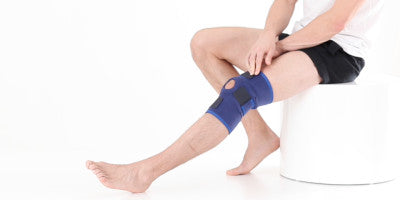
If you're feeling hesitant or recovering from joint discomfort, you don't have to do it alone. Pairing gentle resistance exercises with targeted joint support can give you the extra support and reassurance you need to move comfortably. Explore our full range of Neo G Supports & Braces, designed to help you stay active.
¹ 369 respondents, One Pulse, May 2026. Email info@neo-g.co.uk for more information.


